
A widely recognized Windows music player known for its llama-whipping antics is undergoing a transformation, aiming to compete in the streaming landscape.
Winamp, which changed the digital music landscape in the late 1990s and early 2000s, has announced a new collaboration with Deezer, an independent streaming service. This partnership will enable Winamp to establish its own subscription service utilizing Deezer’s white-label technology and extensive music library.
Set to debut in early 2027, the updated platform will enable users to access music from the streaming library alongside their local files and internet radio stations, as detailed in the company’s announcement. Additionally, users will have the option to personalize their interface with “skins,” a cherished feature from the original music player.
While this may seem like a revival, it’s not entirely accurate. Although Winamp has become less prominent amid the rise of streaming services, the music player remains available for download, with the company reporting that over 40 million users still engage with the desktop version.
Originally launched by Nullsoft in Arizona in 1997, Winamp rapidly became the preferred application for managing and playing digital music files, boasting 60 million users in 2001.
Famous for its catchy tagline “Winamp, it really whips the llama’s ass”—the opening line of the default demo track that accompanied the software—it was not the first MP3 player for computers, but it significantly outperformed its competitors in speed, style, and functionality.
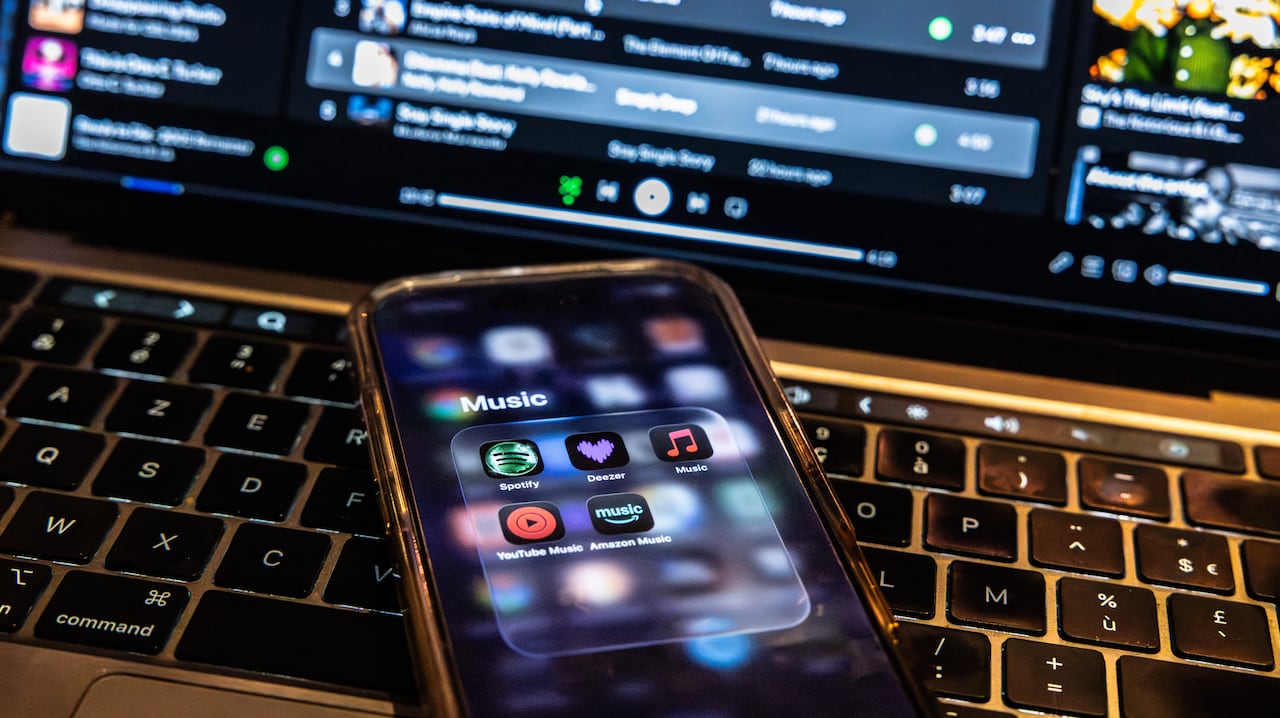
Music streaming services such as Spotify, Deezer, and Apple Music are displayed on a smartphone in France on June 1. (Grichka Beysson-Leandri/Hans Lucas/AFP/Getty Images)
“Twenty-five years ago, we transformed the way people enjoyed digital music, and we believe it’s time to redefine the listening experience once again,” stated Alexandre Saboundjian, CEO of Winamp Group, in a press release regarding the upcoming plans.
The company has made previous attempts to enter the streaming market. In 2018, Saboundjian informed TechCrunch about a mobile version slated for release in 2019 that would unify users’ music, podcasts, and streaming services. However, the anticipated app did not materialize the following year.
The music player on everyone’s computers
AOL purchased Nullsoft in 1999 for an estimated $80 million to $100 million. While Winamp initially continued to thrive post-acquisition, the merger ultimately posed challenges for the music player.
Mismanagement and cultural conflicts between AOL and Nullsoft leaders led to Winamp missing its opportunity to maintain a competitive edge, allowing rivals like Apple’s iPod to gain ground, as reported in an Ars Technica report on the platform’s decline.
For many music aficionados, Winamp’s skins represent a nostalgic era of open-source creativity. An online “skin museum” preserves a collection of the myriad layouts fans created and shared for earlier iterations of the music player.
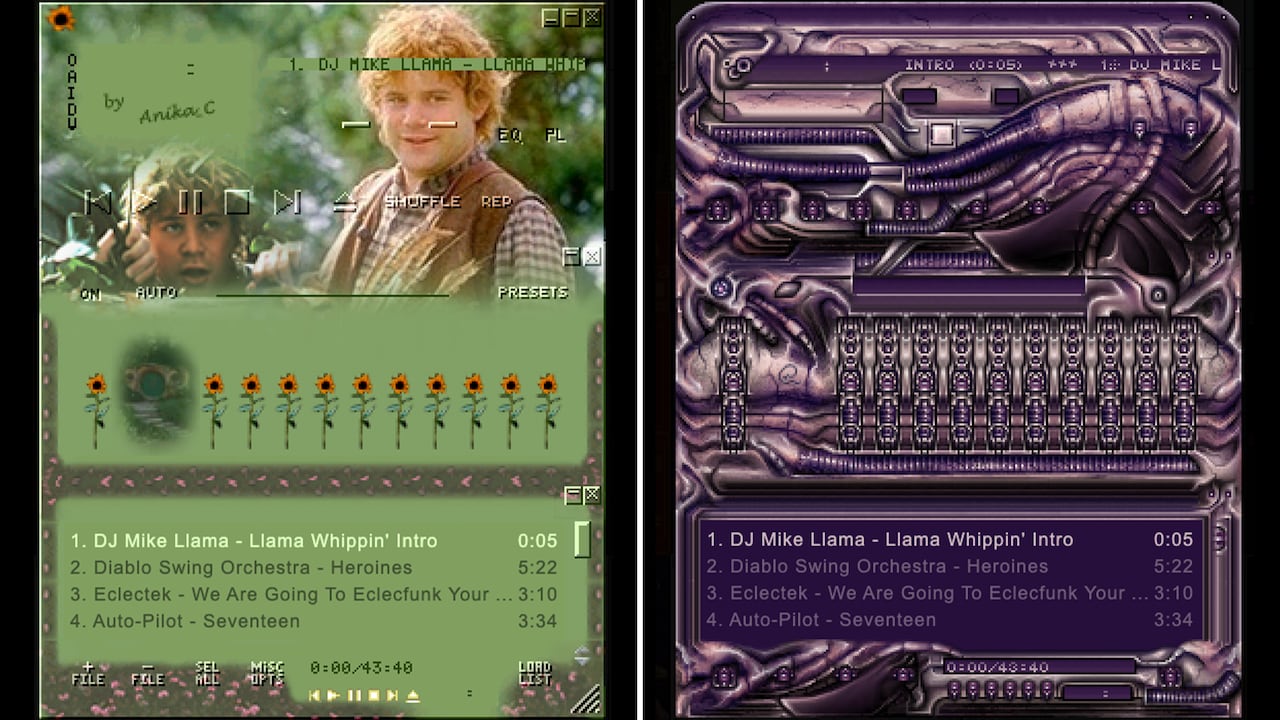
Winamp was recognized for its customizable interfaces, which the company confirms will be a feature of the new streaming extension. The ‘Winamp Skin Museum’ maintains downloadable versions of skins for the legacy version. (Winamp Skin Museum/Anika_C/Peacemaker)
AOL planned to shut down the platform at the end of 2013. However, Winamp narrowly escaped closure when Radionomy, a Belgium-based company which later rebranded to Llama Group and eventually Winamp Group, acquired it.
After exploring music NFTs, Winamp made further attempts to reinvent itself in 2023 and 2024 with a new platform designed for artists and fans to connect, as well as a fresh mobile application for Android and iOS.
Details regarding the pricing structure for the forthcoming streaming service remain unclear, and additional information has not yet been disclosed. If everything proceeds as planned, users eager to enjoy music on an interface featuring characters from Lord of the Rings may see their wishes fulfilled next year.
However, not all fans are excited about the changes. Some Reddit users expressed dissatisfaction with the idea of a music player historically linked to the era of home programming transitioning to a subscription model. Following the rollout of the new platform, the desktop version will also offer a premium subscription option.
“I still use the old Winamp…. It works just fine,” remarked one user in a comment reacting to the announcement.
