
LNG Canada has announced that its multi-billion dollar Phase 2 expansion in Kitimat, B.C., will proceed, potentially doubling the amount of liquefied natural gas exported from the facility to international markets.
In a statement made on Tuesday, CEO Chris Cooper highlighted that the initiative will generate thousands of jobs and bolster Canada’s status as a reliable energy partner.
“The Phase 2 project is another investment that builds our nation, showcasing that Canada can undertake large-scale projects when governments, First Nations, local communities, skilled workers, contractors, and investors collaborate with a common goal,” Cooper remarked.
LNG Canada operates as a joint venture that includes Shell, Petronas, PetroChina, Mitsubishi Corporation, and Korea Gas Corp.
The Kitimat facility successfully delivered its inaugural cargo of LNG for Asian markets last year.
During his address in Vancouver, Prime Minister Mark Carney mentioned that the private sector investment estimated at $33 billion for LNG Canada’s Phase 2 will establish it as the second-largest facility of its kind worldwide.
“This will link Canadian energy, which is low-cost and low-carbon, to global markets,” he stated.
According to Carney, the expansion and the increase in LNG production is projected to contribute billions to the national economy and create around 4,000 new jobs in Kitimat during peak construction periods.
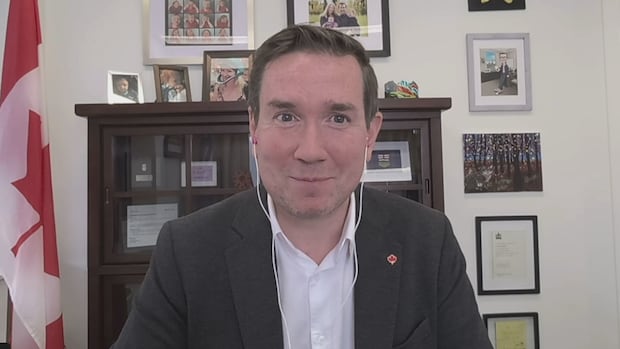
Conservative MP Ellis Ross from Skeena-Bulkley Valley, a steadfast supporter of LNG and former chief councillor of the Haisla Nation, asserted that the acknowledgment for the project should primarily go to local Indigenous leaders who have long been advocating for the LNG sector.
“It’s essentially meaningless; it’s just politicians trying to take credit for something they didn’t contribute to,” Ross commented on Tuesday’s announcement.
“It’s important to recall that the NDP opposed LNG until 2017, labeling it a mere pipe dream. They claimed that if LNG were to be developed, Victoria would be submerged. The Liberal government also argued there was no viable business case for LNG.”

Ellis Ross, the Conservative MP for Skeena-Bulkley, argues that politicians were taking the credit for the Tuesday announcement when local Indigenous nations deserved it. (Robin Rowland/The Canadian Press)
Although the LNG sector enjoys robust backing from the federal government, along with support from the campaigning B.C. NDP and Conservative Party of B.C., there are concerns among critics that its swift expansion will exacerbate Canada’s greenhouse gas emissions during a critical climate period.
What is LNG?
LNG, or liquefied natural gas, is derived from natural gas, a fossil fuel frequently extracted in northeast B.C. and Alberta through hydraulic fracturing, known as fracking.
This process entails drilling into the earth and injecting a combination of water, sand, and chemicals to liberate the oil and gas.
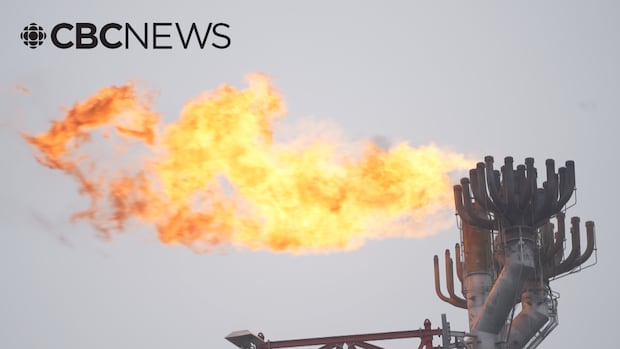
The gas is subsequently transported through pipelines to terminals, where it is cooled to approximately -160 C, making it suitable for overseas shipment as fuel.
LNG Canada indicated that the expansion project is anticipated to approximately double the annual liquefied natural gas production from 14 million to 28 million tonnes.
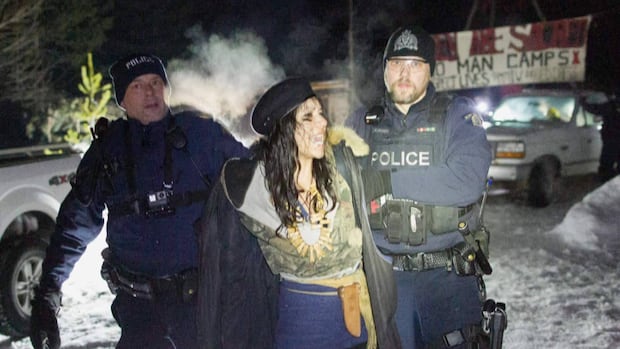
The company also mentioned it is collaborating with Coastal GasLink to enhance the capacity of the existing 670-kilometre pipeline by constructing five new compressor stations across northern B.C., including areas previously obstructed by Wet’suwet’en hereditary chiefs and their supporters, leading to widespread protests and arrests.
LNG is often labeled as “clean” because its combustion for fuel emits fewer pollutants compared to coal or oil; however, some experts dispute this claim due to the energy and environmental destruction associated with its production.
One recognized consequence of fracking is an increase in seismic activity, which has been increasingly reported in B.C.’s Peace River region in recent years.
Critics also argue that boosting LNG production would significantly raise emissions from natural gas production in British Columbia.
Environmental advocates contend that the urgency to reduce emissions is heightened following a federal report urging Canadians to brace for a future that could be 5 C warmer — a scenario that would result in the loss of glaciers in western Canada and longer, more severe summer droughts, among other consequences.
Political priority
Nonetheless, the expansion has been recognized as a project of national significance under Carney’s leadership, receiving backing from both the B.C. NDP and the B.C. Conservative Party, both of which have promised to accelerate LNG production if they secure a government position after the provincial election on October 24.
On the campaign trail Monday, B.C. Conservative Leader Lorne Doerkson unveiled his strategy to transform B.C. into an “energy superpower,” vowing to eliminate bureaucratic hurdles to triple LNG production by 2035.

In response, the B.C. NDP claimed that the proposal lacked ambition and stated that it has existing plans to surpass Doerkson’s targets.
The B.C. Greens have called for a halt on LNG expansion, citing environmental threats and concerns regarding Indigenous rights, arguing that the expedited approval of projects undermines oversight and accountability.
